Beginners in image generation make a short, predictable list of mistakes, because the tool's feedback is instant and its lessons are subtle. This guide collects the list for the Whisk AI picture app so you can learn from other people's tuition instead of paying your own: the overloaded prompt, the unprepared reference, the style roulette, and the draft abandoned one refinement too early.
Each mistake arrives with its correction attached, and none requires talent — only the willingness to work slightly more deliberately than the slot-machine style the interface tempts you toward.
Read it before your second week with the app. The mistakes are most expensive exactly then, when enthusiasm is highest and habits are still wet cement.
Mistake One: The Everything Prompt
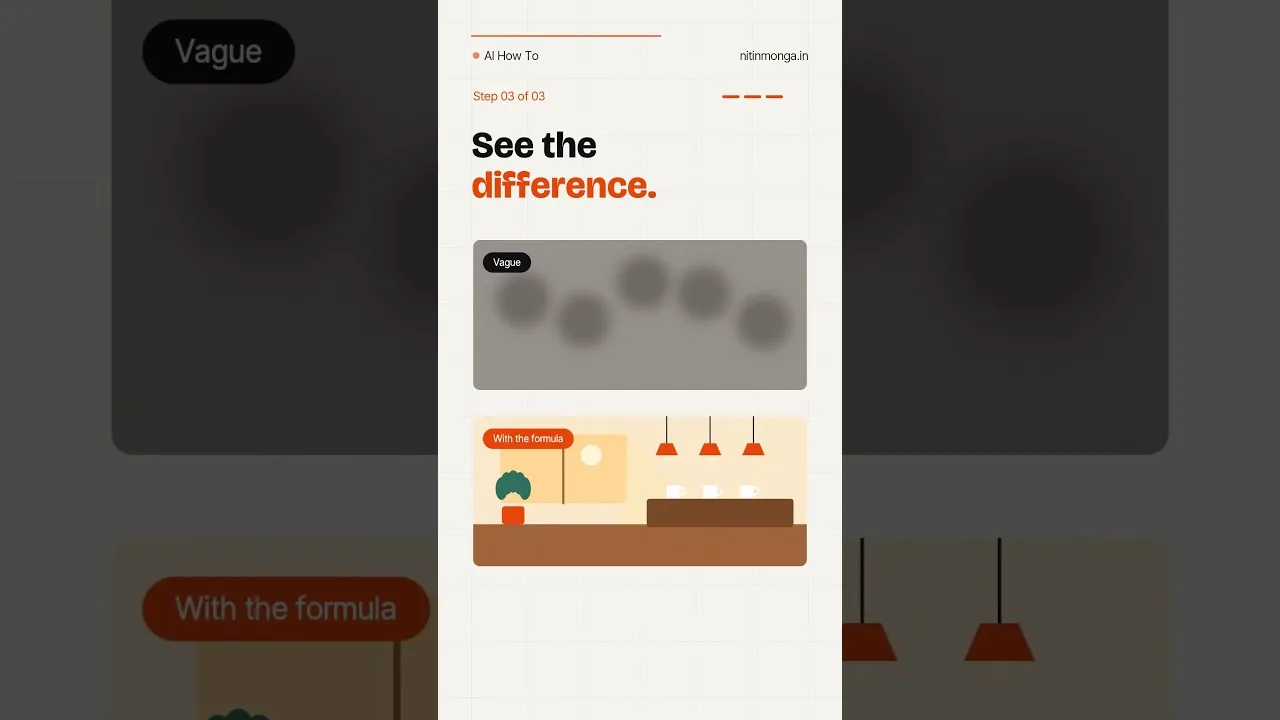
The beginner's prompt is a paragraph of wishes: subject, backstory, three styles, two moods, and a request for awards. The model averages the wishes into a competent blur, and the beginner concludes the model is mediocre. The model was fine; the brief was a committee.
The correction is the skeleton from the prompt guide: subject, scene, style, light, in that order, one instruction per clause. Short briefs feel less ambitious and produce more ambitious pictures.
Mistake Two: The Unprepared Reference
Uploading whatever photograph is nearest — shadowed, angled, crowded — and expecting the app to extract a clean subject from it is the reference version of the everything prompt. Extraction inherits the reference, and garbage in composes garbage out with impressive fidelity.
Spend the five minutes: plain background, even light, subject large. It is the highest-leverage time in the entire workflow, as the core image creation tools in Whisk AI explained makes plain about how the app reads its inputs.
Mistake Three: Style Roulette
Trying a new style every generation feels like exploration and functions as amnesia: nothing is learned because nothing is held constant, and the folder fills with unrelated singles that could belong to six different creators.
The correction is a style fortnight. Live inside one treatment for two weeks — all subjects, all scenes — until its behaviour is known in your hands. Depth in one style impresses more than tourism in twenty, and the second style, when it comes, will be learned in days because the method now exists. The families themselves are mapped in Whisk AI image styles explained; your job is sequence, not selection.
Mistake Four: Judging the Draft as the Final
Beginners generate once and render a verdict on the technology. Practitioners generate a draft and render a verdict on the draft, which is a different and much more useful judgement, because drafts can be refined and technologies merely praised or blamed.
Adopt the two-stage rhythm: the first generation is raw material, the refinement is the work. Most pictures you admire from other users are third or fourth generations; you were simply never shown the earlier ones.
Mistake Five: No Notebook, No Files
The winning prompt unrecorded, the brilliant result unexported, the reference deleted in a tidy-up: beginners lose more good work to housekeeping than to bad generation, because the app makes producing easy and keeping feel optional.
The correction costs two minutes per session: export the keepers, write the recipe beside them, file by project. By the second month this feels less like discipline and more like the obvious behaviour of someone whose work matters to them — which is the identity you are building.
Mistake Six: Publishing the Near-Miss
Excitement publishes the almost-right image: the extra finger, the melted earring, the sign that spells nonsense. Audiences find these instantly, and one visible flaw re-prices every good picture around it.
Institute the twenty-second inspection — faces, hands, text, edges, at final size — as a non-negotiable gate. It is the cheapest quality system in existence and the one whose absence is most loudly noticed.
Mistake Seven: Quitting at the First Hard Subject
Every beginner hits a subject the model handles badly — a specific object, a kind of scene — and generalises the failure into a verdict on the app. Usually the subject is one composition change away from working, or one style change from forgiving.
Keep a small list of your hard subjects and revisit it monthly with your improved skills. Watching the list shrink is the most concrete progress report this craft offers, and it is written entirely by you.
None of these mistakes is about talent; all of them are about sequence and record-keeping, which is excellent news, because sequence can be adopted tonight. Brief clearly, prepare references, hold a style, refine drafts, keep files, inspect before publishing.
Your second month with the app will not resemble your first. That is not the tool improving; that is you, and it compounds.
Return to this list at the end of your first month and mark which mistakes you made anyway. The honest count is usually two or three, and they will be different ones than you predicted — which is itself the final lesson: your real beginner profile is discovered, not assigned.
There is an eighth mistake, too gentle to list above: believing the mistakes end. Each new level of ambition — series, clients, products — reintroduces them in finer clothing, and the practitioners you admire are simply the ones who built the inspection habits that catch the fine versions.